
Written by Erik Windrow
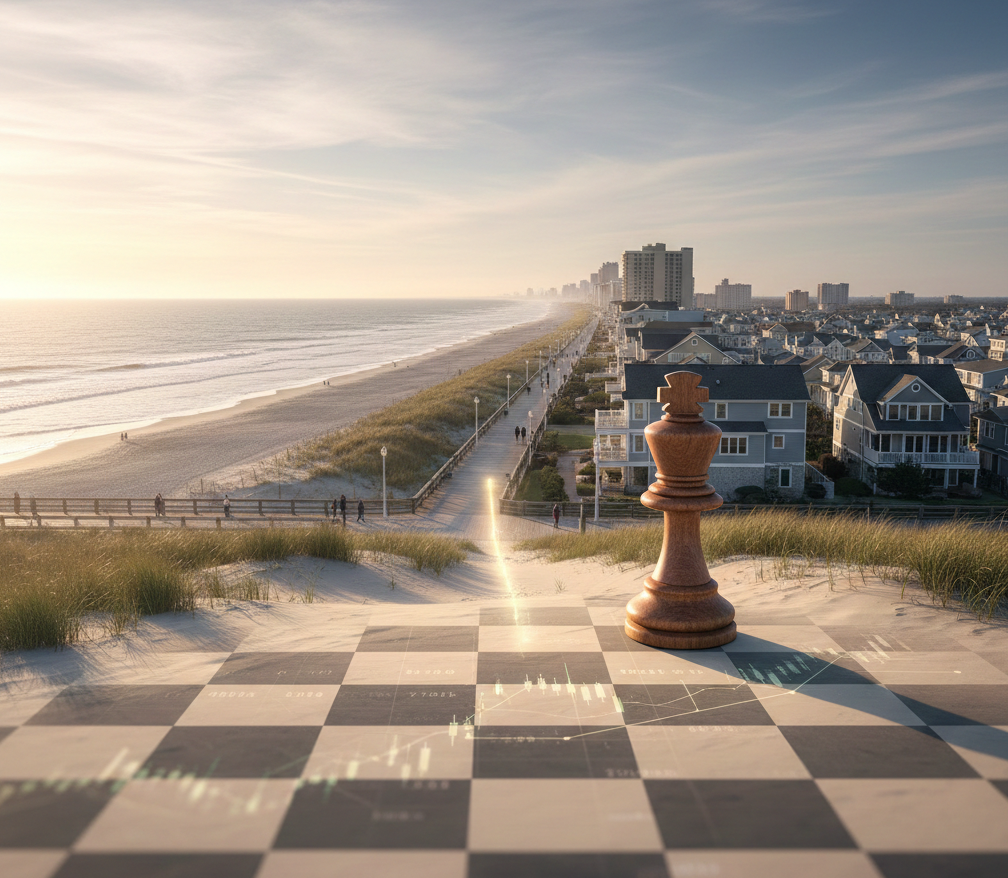
By Erik Windrow | The Windrow Group
Invest in the Beach Lifestyle
Sometimes, history finds you when you least expect it.
Recently, while cleaning out an older investment property I had purchased, I opened a bedroom closet and discovered a forgotten copy of The Daily Times dated Thursday, September 6, 1973.
More than 50 years had passed.
Inside was an article documenting a decision that would help shape the future of Ocean City and its shoreline.
The headline read:
“Resort Accepts Federal Plan To Protect Beaches”
I had found more than an old newspaper.
I had found a snapshot of a moment when Ocean City was making decisions about what its coastline would look like for generations to come.
In 1973, coastal erosion and the threat of hurricanes were already serious concerns for Ocean City.
According to the article, city leaders had agreed to participate in a $10 million U.S. Army Corps of Engineers beach erosion and hurricane protection project, after initially hesitating over the city's estimated $3.3 million share of the cost.
The proposed project called for significant changes to the shoreline, including:
Raising existing 16-foot dunes to a 25-foot crest
Stabilizing dunes with beach grass
Pumping additional sand onto eroded sections of beach
Installing protective structures where dunes alone were not sufficient
Developing a long-term approach to protecting Ocean City's shoreline
There was also debate over how best to protect the beach.
Some officials believed offshore groins could provide a better way to retain sand naturally.
The future, as it always does, was uncertain.
But one thing was clear: Ocean City was beginning to make a substantial investment in protecting its coastline.
Walk across an Ocean City dune today, and it can be easy to take the landscape for granted.
You see the sand.
You see the sea oats and beach grass.
You see families heading toward the water and visitors enjoying one of Maryland's most recognizable beach destinations.
But those dunes represent decades of planning, engineering, maintenance, and public investment.
The basic challenge identified in that 1973 article has never really disappeared. Beaches naturally lose sand through storms, waves, and coastal processes. Maintaining the shoreline therefore requires continued work.
Today, beach nourishment and dune restoration continue through partnerships involving the U.S. Army Corps of Engineers, the State of Maryland, Worcester County and the Town of Ocean City.
Sand is periodically placed along the shoreline to replace material that has been lost, while dunes are maintained as an important part of the coastal protection system.
What began as a major decision in 1973 became part of a much longer story.
For most people, the dunes are simply part of the Ocean City experience.
For those who live, work, and invest here, they represent something more.
They form part of a broader coastal protection system that helps shield:
Homes and residential communities
Condominiums and multifamily properties
Hotels and hospitality businesses
The Boardwalk and local businesses
Roads and public infrastructure
The broader coastal economy and property base
The dunes cannot prevent every storm or eliminate coastal risk. No coastal protection system can.
But they are an important line of defense between the Atlantic and the community that has developed along its shore.
In 1973, spending millions of dollars to protect a beach was a significant decision.
Looking back more than five decades later provides an entirely different perspective.
Ocean City has continued to grow and evolve through hurricanes, nor'easters, winter storms, and the ongoing forces of nature.
That doesn't mean the shoreline is permanently protected. It means generations of leaders have continued to recognize that maintaining a coastal community requires continued investment.
Beach nourishment isn't simply about maintaining a stretch of sand for visitors.
It is connected to homes, businesses, tourism, infrastructure, and the economic activity that makes a coastal community possible.
The decisions made decades ago continue to have consequences today.
After more than 25 years helping buyers and sellers throughout Maryland and Delaware, I've learned that understanding a community's history can be just as valuable as understanding its current market.
Real estate is about more than a structure sitting on a piece of land.
It is also about the community around it.
It is about infrastructure, planning, investment, and the decisions that shape a place over time.
That is especially true in a coastal market.
When you invest in a beach community, you're not only investing in today's view, today's neighborhood, or today's market.
You're becoming part of a place that has been shaped by generations of decisions.
That forgotten newspaper in an old closet reminded me of that.
What looked like a piece of history was actually a reminder of the future-minded decisions that helped create the Ocean City we know today.
1973 | 2026 |
Ocean City accepts a federal beach erosion and hurricane protection plan. | Beach nourishment and dune restoration remain ongoing components of coastal protection. |
Existing 16-foot dunes are proposed to be raised to 25-foot crests. | Engineered dune systems remain an important part of Ocean City's coastal protection strategy. |
A $10 million project is under discussion. | Coastal protection represents decades of continued public investment. |
Officials debate different approaches, including offshore groins. | Beach nourishment and dune restoration continue to be used to address shoreline erosion. |
The long-term future of the shoreline is uncertain. | Ocean City continues to maintain and invest in its coastline while facing ongoing coastal challenges. |
History isn't always found in museums.
Sometimes it's tucked away in the closet of an old beach house.
Sometimes it's printed on a piece of yellowed newspaper that has been sitting untouched for more than half a century.
And sometimes, that piece of history reminds us that the places we enjoy today were shaped by decisions made long before we arrived.
The next time you walk across the dunes toward the Atlantic, take a moment to look at them differently.
They aren't simply sand and beach grass.
They are part of a story that began decades ago.
A story about vision.
An investment story.
And a reminder that the future of a coastal community is shaped by the decisions made today.
— Erik Windrow
The Windrow Group
Invest in the Beach Lifestyle
Published: September 28, 2026